

Modern software organizations are witnessing a fundamental paradigm shift as isolated autocomplete extensions evolve into interconnected, full-lifecycle systems. Implementing robust AI developer tooling stacks allows engineering teams to bridge the gap between ad-hoc code generation and systematic architectural execution across the entire software development lifecycle (SDLC). As software systems grow in complexity and distributed microservices multiply, engineering leaders must design integrated workflows that provide AI agents with full repository context, continuous verification, and automated peer review.
As a senior engineer and founder, I, Abul Kalam, have spent years architecting web, mobile, and intelligent agent systems. Across enterprise and startup environments alike, one reality has become undeniable: typing speed has never been the primary bottleneck in software engineering. The true friction points lie in understanding legacy codebases, managing cross-boundary dependencies, enforcing architectural invariants, and maintaining rigorous code review standards under high release velocities.
Deconstructing Modern AI Developer Tooling Stacks
To understand where developer tooling is heading, we must look at how the layers of the developer environment interact. An effective stack is no longer just a standalone plugin inside an editor; it is a multi-tiered pipeline operating across three distinct operational planes:
- The Synchronous In-Editor Layer: Inline assistants and multi-file agentic workspaces (such as Cursor, Windsurf, or Copilot Workspace) that assist the engineer in real time during active development sessions.
- The Context & Knowledge Plane: Code graph indexers and Model Context Protocol (MCP) servers that connect language models to distributed repos, documentation, ticket trackers, and runtime metrics.
- The Asynchronous CI/CD & Review Layer: Headless agents that perform background code refactoring, triage pull requests, run automated regression simulations, and ensure architectural compliance prior to human sign-off.
When these three layers operate in isolation, developers suffer from disjointed context, hallucinated API contracts, and high review fatigue. When unified into cohesive AI developer tooling stacks, engineering throughput multiplies because context flows seamlessly from repository graph to pull request.
The Context Engine: Why Architecture Trumps Raw LLM Intelligence
Many engineering teams make the initial mistake of treating frontier models as drop-in replacements for senior developers. However, frontier intelligence without codebase context consistently generates plausible yet flawed code. An agent attempting to implement a new billing endpoint might produce clean TypeScript, but completely ignore your custom authentication middleware, skip tenant isolation constraints, or misapply your standard DTO validation schemas.
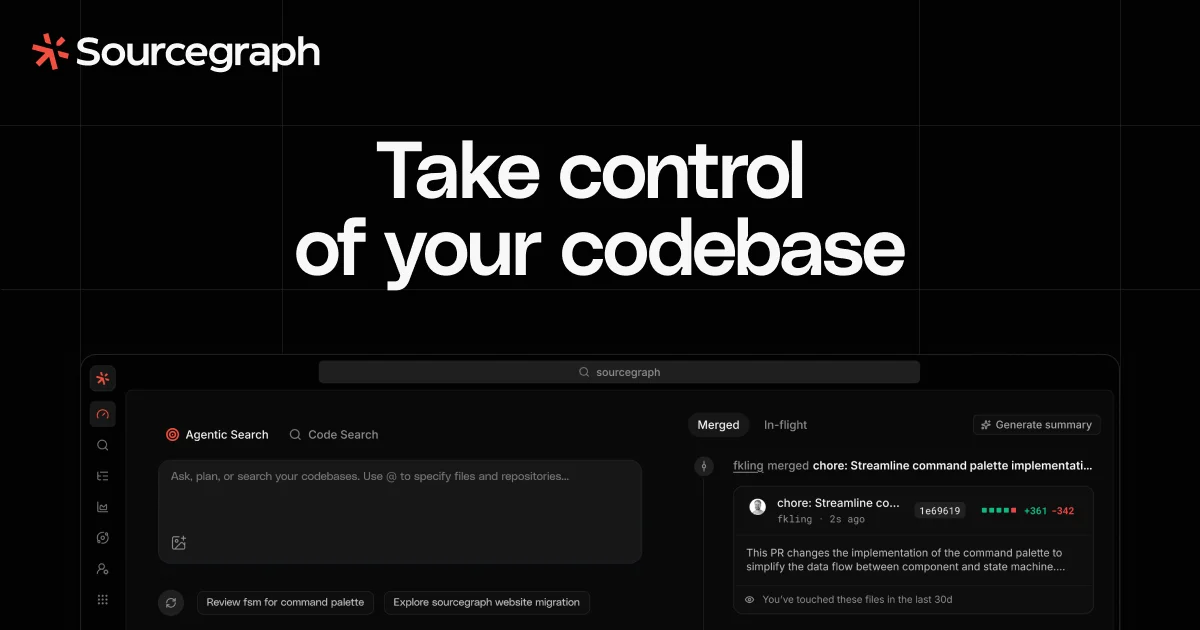
Context grounding is the critical differentiator. Platforms like the Sourcegraph code intelligence platform demonstrate that deep repository indexing, precise semantic search, and universal graph traversal are non-negotiable prerequisites for autonomous agents. By surfacing exact cross-repository dependencies and structural syntax trees, code intelligence servers feed agents with precise, grounded prompt context. When an agent understands how services communicate across repos, it can perform multi-file modifications without introducing breaking changes or schema drifts.
4 Key Architectural Shifts in the Modern Developer Workflow
As developer infrastructure matures, engineering teams are re-architecting their pipelines around four foundational principles:
- From Single-File Autocomplete to Multi-File Agentic Orchestration: Developers are spending less time prompting for individual utility functions and more time managing agentic plans that touch ten or twenty files simultaneously, updating interfaces, unit tests, and implementation layers in a single transaction.
- Standardized Context Retrieval via Model Context Protocol (MCP): Teams are standardizing repository context sharing through open protocols. Instead of proprietary siloed indexing, MCP servers expose relational databases, internal design systems, and deployment configurations to whichever agent is currently in execution.
- Headless PR Review and Verification Agents: Pull request reviews are increasingly pre-processed by specialized agents running inside CI pipelines. These agents run static analysis, check for security regressions, verify test coverage, and summarize architectural trade-offs before a human reviewer even opens the notification.
- Deterministic Guardrails and Safe Execution Sandboxes: Autonomous refactoring tools require isolated execution environments. Sandboxed containers allow AI agents to compile code, run test suites, inspect linters, and iteratively self-heal errors before submitting changes for human inspection.
Overcoming Engineering Pitfalls and Implementation Blind Spots
Adopting advanced tooling stacks does not come without genuine engineering risks. Teams that rush adoption often encounter prompt injection vulnerabilities, context window saturation, and code bloat. When code generation becomes frictionless, codebases can expand faster than human teams can comfortably maintain them.
To mitigate these challenges, engineering leaders must institute strict quality guardrails:
- Mandate automated integration tests for all agent-generated code to prevent subtle logical errors from slipping into production.
- Enforce zero-retention enterprise privacy policies when routing proprietary code through external model inference APIs.
- Establish code ownership hierarchies where human engineers remain the ultimate accountable owners of architecture and operational reliability.
Conclusion: Preparing Your Engineering Organization for Autonomous Workflows
The transition toward agent-assisted engineering is not about eliminating human creativity; it is about elevating developers from manual typists to strategic systems architects. By systematically integrating AI developer tooling stacks across the entire software development lifecycle, engineering teams unlock unparalleled release velocity while maintaining uncompromising architectural standards.
If your team is seeking to modernize its software engineering infrastructure, architect custom AI integrations, or accelerate digital product delivery, explore our engineering insights and connect directly with our team at abulkalam.dev.